Plastic Free July 2026: Breaking Up With Your Coffee Cup
admin | 22 September 2026
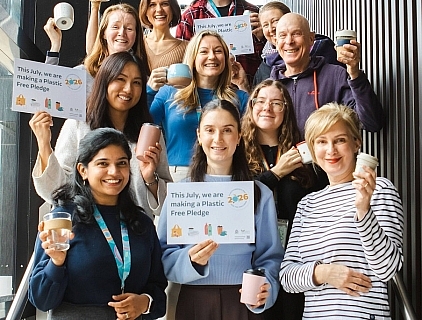
On 1 July, The PERTH Trial research team at The University of Western Australia joined the Plastic Free July world-record attempt for the most plastic-free pledges made in a single day.
So which plastic product did they go without?
They voted for single-use takeaway cups, including for coffee, juice, matcha, smoothies, soups – anything that comes in a single use cup!
Why is this significant?
Spending a whole month consciously avoiding something we purchase every day is the perfect way to break unhealthy habits and form new ones. Remembering to bring an alternative, like a ceramic mug, or keep cup, was a new and fun challenge. Remembering to wash it for the next day was even more important!
Single-use takeaway cups represent everything that is wrong with modern consumerist culture, as well as being a significant burden on the environment, and a regular source of human exposure to plastic-associated chemicals, that leach from the lining of the cup (yes, even ‘paper’ cups are lined with plastic).
Reflecting on her experience during Plastic Free July, PERTH’s Trial’s Dr Amelia Harray said, “It was much easier than I expected. Having a blanket rule made it easier for me to implement the change. It’s the 24th August and I still haven’t used a single use coffee cup!”
What does action like this achieve?
The environmental impact of a large-scale individual action like this should not be underestimated. Even amongst asmall team, a month without single-use cup purchases kept hundreds of cups out of landfill.
It doesn’t take much to realise the significance of multiplying that effect across workplaces and families around Australia, and the world.
Those cups would have gone straight to landfill because the plastic lining makes them impossible to recycle, or reuse. Even cups that claim ‘eco’ status or ‘plant based’ fibre still contain plastic-associated chemicals to create a waterproof cup lining.
The health benefits of ditching plastic-lined single-use cups are worth noting too. Research published in Nature Medicine by The PERTH Trial team shows that we are all exposed to plastic-associated chemicals every day. Some of these chemicals are known endocrine disruptors, which means they prevent the normal functioning of hormonal systems in our bodies. This can impact things like heart health, metabolism, immune function and fertility, as well as contribute to serious diseases like cancer, diabetes and cardiovascular disease.
What are plastic-associated chemicals?
There are over 16,000 chemical compounds that are used to make a variety of plastic and other products. These chemicals include phthalates, bisphenols (like BPA, or BPS) and PFAS, which give plastic products certain physical properties, like flexibility or strength.
Plastic-associated chemicals are different to microplastics, which are tiny pieces of plastic, less than 5mm in size, that are the unintentional result of plastic products breaking up.
Microbeads are microplastics that are intentionally added to personal care products, to create certain effects, such as exfoliation.
So why are we still using these cups if they’re so dangerous?
If these products were dangerous surely someone would have banned them, right?
While Australians generally enjoy a high standard of regulation in food safety and handling, the global packaging industry and global food system is a fast-moving commercial machine.
Regulators can’t possibly keep up with all the chemical additives in all the different types of packaging, both from Australian-grown and imported food products. When BPA was regulated in 2010, it was voluntary, and has since been replaced in many cases with BPS, which is chemically similar to BPA but remains untested and unregulated.
Chemicals in plastic food packaging are mostly untested on human health. However, those that have been studied show associations with a range of health conditions and serious diseases. It is now understood, thanks to research from The PERTH Trial and other research groups, that the chemicals from plastic packaging leach into our food, and at a much greater rate when the food or beverage is heated.
So, what can we do to make positive changes?
Regulation of the packaging industry is long overdue. As consumers we can advocate for this through campaigns like Plastic Free July Boomerang Alliance National Packaging Solution, and by voting with our wallets, and choosing products free from plastic packaging.