How a dietitian makes low-plastic eating easy
admin | 6 July 2026
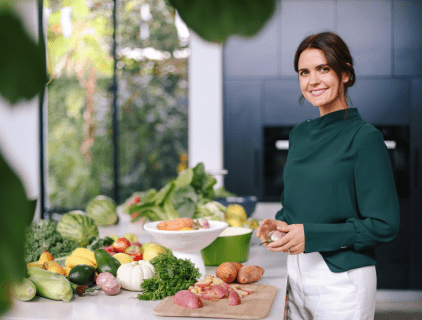
Plastic is woven through our food system in ways most of us never notice, but everyday changes to what and how we eat can reduce our exposure, and they don’t need to cost more or take extra time. As a Nutritionist, Dietitian and Clinical Researcher in plastics and human health, I ran a free online webinar, Low Plastic Eating Made Easy, to make reducing plastic in your diet feel manageable rather than overwhelming, with practical ways to shop, store and prepare food. I’m sharing some practical tips with you.
When people picture plastic in food they think of microplastics, the visible crumbs as plastic breaks up. But the bigger concern is invisible, the plastic chemicals that leach from the materials used in our daily lives, and that’s where the strongest evidence of health harm sits1,2. There are more than 16,000 chemicals used during the production of plastics3 and many of these are known endocrine disruptors, like BPA and DEHP. Our foods and drinks are a major route into the body4 and higher exposure is linked to obesity, heart disease, reproductive issues and other concerns at every life stage2,5,6,7,8. Confusingly, these chemicals are not only in plastic but in can linings, and some ‘plastic free’ kitchenware and non-stick pans. We can’t avoid them entirely, but research shows we can lower how much ends up in our bodies by changing what and how we eat4. Better still, low-plastic and healthy eating go hand in hand, with less processed, less packaged food being better for your health and the planet.
Changing eating habits is hard, so before you throw out the whole kitchen and wander the supermarket hunting for plastic-free packaging (harder than you’d think!), aim for small, specific, repeated actions. The swaps below have worked for my dietetic clients, though yours may look different. Start with what you use most.
At the supermarket
What goes in the trolley is the biggest lever. Highly packaged, canned and ultra-processed foods, especially single-serve ones, are among the largest dietary sources. This is for three reasons: their many industrial ingredients each pass plastic touchpoints; individual packaging means more surface touching the food; and many are designed to be microwaved in their plastic, driving transfer up. Think ready-made meals, rice sachets and meat pies.
Aim for more whole and minimally processed foods, loose fruit and veg, and glass or cardboard where you can. Choose passata over tinned tomatoes, peanut butter in glass and oats over porridge sachets. No low-plastic option? Choose a bigger packet over single-serves.
Storing food
Even if a food only comes in plastic, transfer it at home. You don’t need to replace every container at once. Start with the two or three containers you use most and save passata or jam jars for nuts, grains and dried fruit at no cost. Glass, stainless steel and ceramic containers or bowls are best for leftovers. Do you have big plastic containers you love? Put a barrier of a paper bag, paper towel or clean tea towel between food and plastic.
Preparing and cooking
The tools that touch food in your kitchen matter. Swap plastic and silicone utensils for wood, bamboo or stainless steel, choose glass, ceramic or metal bowls, and use wooden, glass or steel chopping boards (yes, even for meat). Since chemicals migrate faster into food that’s fatty, acidic, alcohol or aqueous9, replace non-stick cookware with stainless steel. To reheat, use a glass container, or a ceramic bowl with a plate on top. And wash produce well before eating.
Out and about
With everyday items, frequency is what adds up. Keep a stainless steel or glass bottle and a reusable cup where you’ll grab them, and the swap soon makes itself.
The impact, and how to start
We need a shift away from feeling overwhelmed and confused to feeling capable and hopeful when it comes to plastic. And regardless of any health benefits of reduce plastic exposure, which science is still not clear on, adopting low plastic dietary habits is good for your nutrition and the planet.
The biggest barriers I see from clients wanting to cut their family’s plastic exposure aren’t knowledge; they’re that people are time poor, confused by nutrition, and not sure who to trust (or whether they’re being greenwashed). Another is the all-or-nothing mindset, but there’s no way to avoid plastic chemicals entirely and dietary changes are more likely to stick when they’re small and sustainable.
Pick one area, change two or three things, and let them become automatic before you add more. Often the most impactful thing we can do is start with the simplest changes and repeat them every day. Small habits are where the real reduction happens, and you don’t have to be perfect to start.
References
- Landrigan, P. J. et al. The Minderoo-Monaco Commission on Plastics and Human Health. Glob. Health 89, 23 (2023).
- Seewoo, B. J. et al. The plastic health map: a systematic evidence map of human health studies on plastic-associated chemicals. Int. 181, 108225 (2023).
- Monclús, L. et al. Mapping the chemical complexity of plastics.Nature 643, 349–355 (2025).
- Harray, A.J., Lucas, A.D. et al.Low-plastic diet and urinary levels of plastic-associated phthalates and bisphenols: the randomized controlled PERTH Trial.Nat Med 32, 1871–1883 (2026).
- Liu, Z., Lu, Y., Zhong, K., Wang, C. & Xu, X. The associations between endocrine disrupting chemicals and markers of inflammation and immune responses: a systematic review and meta-analysis. Environ. Saf. 234, 113382 (2022).
- Gao, H. et al. The associations between prenatal phthalate exposure and childhood glycolipid metabolism and blood pressure: an updated systematic review and a pilot meta-analysis of prospective cohort studies. Environ. Saf. 262, 115157 (2023).
- Golestanzadeh, M., Riahi, R. & Kelishadi, R. Association of exposure to phthalates with cardiometabolic risk factors in children and adolescents: a systematic review and meta-analysis. Sci. Pollut. Res 26, 35670–35686 (2019).
- Dunder, L., Lejonklou, M. H., Lind, P. M. & Lind, L. Urinary bisphenol A and serum lipids: a meta-analysis of six NHANES examination cycles (2003–2014). Epidemiol. Community Health 73, 1012 (2019).
- Survey of Plasticisers in Australian Foods. Canberra: Food Standards Australia New Zealand; 2018.