Cigarette Filters: Plastic We Can Butt Out
admin | 26 June 2026
Cigarette Filters: A Plastic Problem We Can Butt Out
Plastic Free July encourages people around the world to reduce plastic waste and rethink the products they use every day. Most discussions focus on plastic bags, bottles, packaging, and disposable items. But one of the most common plastic products in the environment is often overlooked: the cigarette filter.
Many people don’t realise that cigarette filters are made of cellulose acetate, a form of plastic. Every year, trillions of cigarette filters are discarded worldwide. They’re found on streets, in parks, on beaches, and in rivers and oceans. Cigarette butts are consistently among the most common forms of litter collected during clean-ups across the globe.
But cigarette filters are not only an environmental problem. Increasingly, health experts argue that they’re also a public health problem.
An Unfiltered Look At Health Impacts
Many people think that cigarette filters were created to protect smokers. In reality, cigarette filters have become one of the tobacco industry’s most successful marketing tools.
Filters make people believe that cigarettes are cleaner, milder, and less dangerous. This false sense of safety has reassured generations of smokers, even though smoking-related diseases remain among the leading causes of preventable death worldwide.
Public health experts increasingly argue that cigarette filters don’t protect smokers in any meaningful way. The Belgian Superior Health Council found that filters actually do more harm than good and recommended a ban on them. According to the Council, filters fail to prevent the harmful effects of smoking while making cigarettes easier and more pleasant to smoke.
Research has shown that smokers often inhale more deeply and more frequently when smoking filtered cigarettes. That means rather than reducing harm, filters can change smoking behaviour. Critics have also argued that ventilation holes in filters help mislead people into thinking filtered cigarettes are safer.
The result is a product that provides no meaningful health benefit while encouraging the belief that it does.
An Environmental Disaster
Not only do filters fail to protect health, they also create a major environmental problem.
Once discarded, cigarette filters can remain in the environment for years. They gradually break down into microplastics that spread through soil, rivers, lakes, and oceans.
Filters also contain toxic substances from tobacco smoke, including nicotine, heavy metals, and other hazardous chemicals. These substances can leach into soil and water, harming wildlife and ecosystems.
The result is a single-use plastic product that combines plastic pollution with toxic waste on a global scale.
Holding The Tobacco Industry Accountable
Too often, discussions about cigarette butt litter focus on the behaviour of smokers or the efforts of volunteers who collect litter. While responsible disposal remains important, it doesn’t address the source of the problem.
The real responsibility lies with the tobacco industry.
Tobacco companies continue to manufacture and sell billions of plastic cigarette filters every year, despite the environmental damage they cause and the growing evidence that they don’t meaningfully protect smoker health.
Under the principle of producer responsibility, companies should be accountable for the waste generated by their products. Cigarette filters should not be an exception.
Education campaigns and public awareness programs still play an important role. They help reduce immediate environmental damage and build support for stronger policies.
But they should be seen as steps toward prevention, not as the final solution.
Starting At The Source
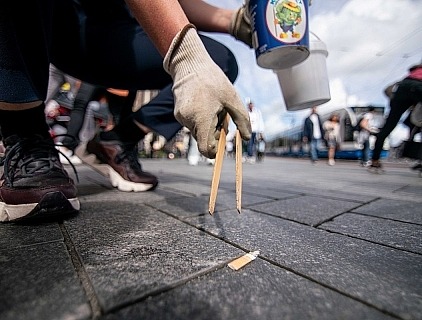
On 4 July, volunteers around the world take part in No Butts Day. This global action day is dedicated to removing cigarette butts from the environment and raising awareness about this widespread form of plastic pollution.
Their efforts make a real difference. Every cigarette butt removed prevents plastic and toxic chemicals from entering nature. At the same time, these clean-up actions reveal the scale of the problem and help build public support for change.
Plastic Free July challenges us to ask which plastics are truly necessary. Cigarette filters are one of the few single-use plastics that are harmful from the moment they are produced. They pollute our environment, create toxic waste, and provide no meaningful health benefit.
Instead of asking how we can clean up billions of cigarette butts, we should ask why billions of plastic filters continue to be produced every year.
A cleaner environment starts with preventing waste at its source. By supporting stronger policies and ultimately a ban on cigarette filters, we can reduce plastic pollution, protect wildlife, and improve public health.